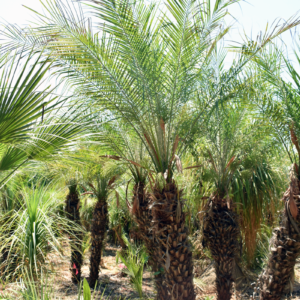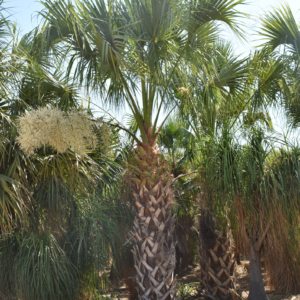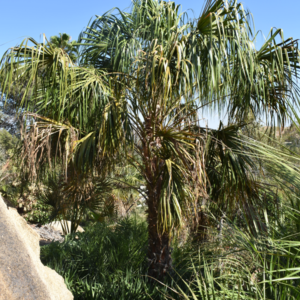
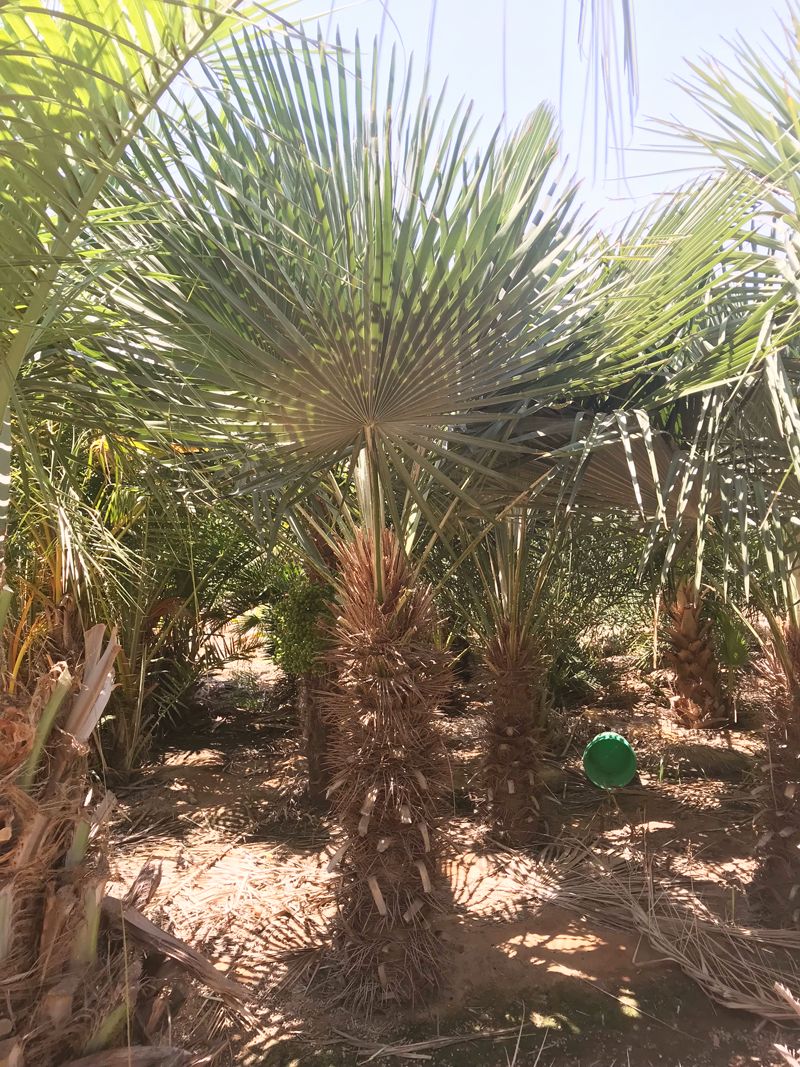
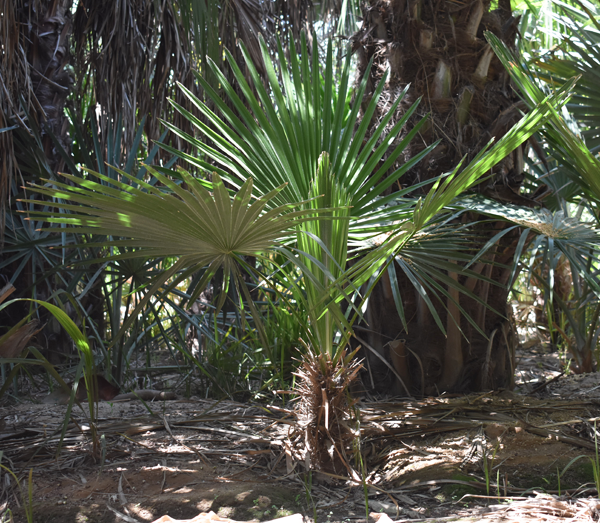
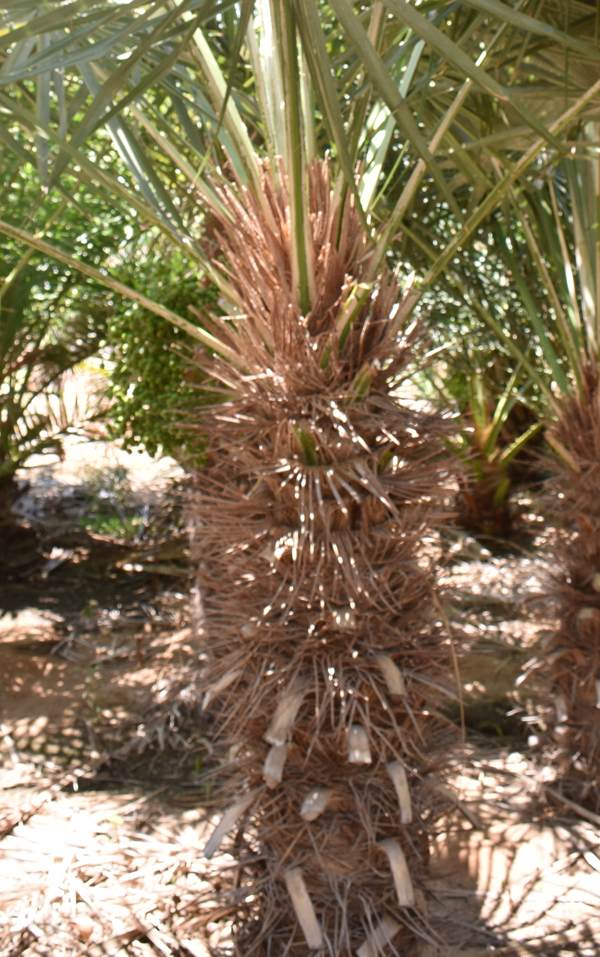
The Brazilian needle palm is not widely cultivated in Southern California, despite being well suited to the climate. Best known for the spines that jut out from its fibrous trunk like the thick hairs of a porcupine, Trithrinax is one of those rare finds that’s hard to forget once spotted.
Trithrinax is hardy, tolerant of abuse, and drought-resistant — a slow grower that handles heat, cold, and full sun with ease. The palm is moderate in size, topped with a neat crown of dull-to-dark-green palmate leaves. The leaf stalks (petioles) are unarmed and about 3 feet long, while the leaves themselves span 3-4 feet wide. From the top of the trunk upward, this palm looks quite similar to a Windmill Palm.
Much has been written about the “armed” spines on the trunk. They are indeed stiff and pointed, but far less intimidating than the leaf armature found on Phoenix dactylifera or P. reclinata.